
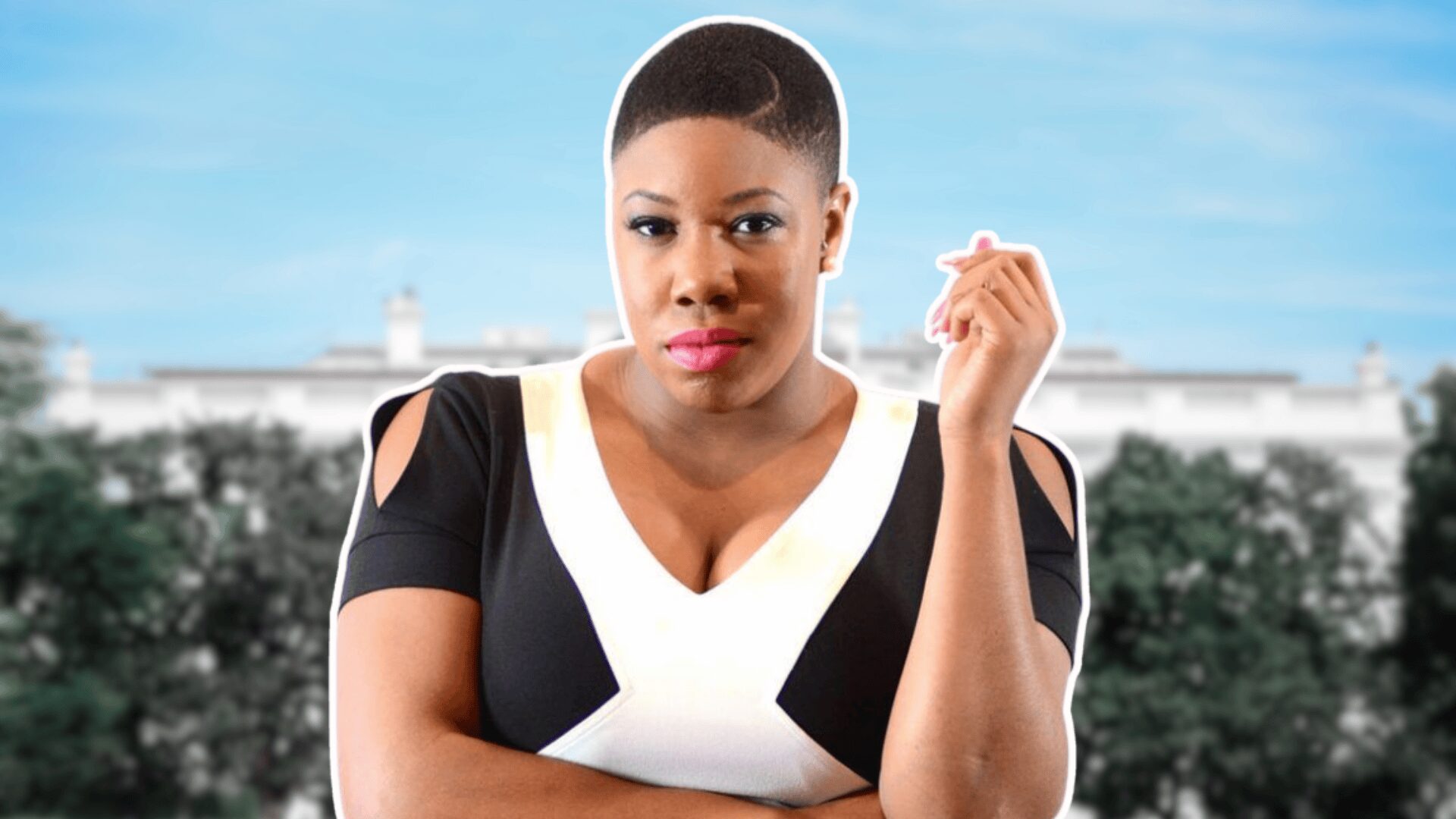
Symone Sanders’ net worth is estimated at $1.5–$3 million. Her earnings stem from MSNBC hosting and executive producer fees, prior CNN contributor pay, paid speaking engagements, book royalties, and cyclical consulting tied to political seasons. Earlier government and campaign roles provided GS-aligned pay and variable campaign compensation. She prioritizes liquidity over illiquid assets, with spending focused on professional visibility and travel efficiency. Philanthropy centers on civic engagement and HBCU support. Growth prospects appear steady via multi-platform media and partnerships—more context follows.
- Key Takeaways
- Who Is Symone Sanders?
- Estimated Net Worth at a Glance
- Early Career and Breakthrough Roles
- Media Salaries: CNN, MSNBC, and On-Air Work
- Political Roles and Government Compensation
- Books, Speaking Engagements, and Consulting Income
- Assets, Lifestyle, and Philanthropy
- Future Earnings Outlook and Career Trajectory
- Frequently Asked Questions
- Conclusion
Key Takeaways
- Estimated net worth: approximately $1.5–$3 million.
- Primary income sources: MSNBC hosting, contributor roles, executive producer fees, speaking engagements, and book royalties.
- Past roles boosting earnings: senior advisor to Vice President Harris and Bernie Sanders’ 2016 press secretary.
- Media compensation: cable contributors earn mid–five to low–six figures; hosts typically command higher six figures.
- Outlook: diversified media and speaking portfolio supports steady, mid-to-high single-digit annual growth.
Who Is Symone Sanders?
A strategist and media executive, Symone Sanders is a political commentator and former senior advisor to Vice President Kamala Harris, recognized for her rapid-rise influence in Democratic politics and cable news. Her profile blends campaign operations, communications strategy, and on-air analysis, positioning her as a measurable voice across policy and media markets.
Career highlights include serving as national press secretary for Senator Bernie Sanders’ 2016 presidential campaign, senior advisor and chief spokesperson for Vice President Harris, and hosting a weekend program on MSNBC. She’s led message discipline, surrogate deployment, and voter outreach, demonstrating operational scale and audience growth. Her Political activism began in Omaha, focusing on juvenile justice and community engagement. Sanders’ brand centers on translating campaign data, demographic shifts, and media consumption trends into actionable insights.
Estimated Net Worth at a Glance
Symone Sanders’ current net worth is estimated in the mid- to high-six figures, based on public contracts, media roles, and speaking fees. Her primary income streams include network hosting/commentary, senior political advising, book royalties, and paid speaking engagements. Year-over-year growth likely tracks contract renewals and platform expansion across cable, streaming, and events.
Current Net Worth Estimate
Though figures vary by source, the best current estimate places Symone Sanders-Townsend’s net worth in the $1.5–$3 million range, driven by multi-channel income: on-air hosting and contributor roles (MSNBC), executive production, speaking fees, book royalties, and prior senior political communications positions. This range reflects current income visibility, contract norms in cable news, and ancillary monetization typical for political media figures. Year-over-year wealth growth appears steady, supported by recurring television compensation and periodic upside from publishing and paid appearances.
Liquidity is likely diversified across cash, marketable securities, and deferred compensation, with human-capital value anchored to brand equity and audience reach. Expense load—taxes, representation, travel—tempers margins but doesn’t impede accumulation. No single asset seems dominant; instead, a diversified earnings stack underpins the estimate’s midpoint confidence.
Primary Income Sources
While exact contract terms aren’t public, primary earnings cluster around five channels: MSNBC hosting/contributor compensation (base plus appearance fees), executive producer fees tied to show development, paid speaking engagements (university/corporate circuits), book royalties and advances, and residual upside from prior senior political communications roles (consulting, advisory, and deferred comp). These revenue sources form diversified income streams with different risk profiles and cash-flow timing. TV salary and appearance fees likely anchor recurring cash, while producer fees add episodic upside tied to show performance. Speaking fees provide high-margin bursts, sensitive to election cycles and news relevance. Publishing generates advances plus trailing royalties. Consulting and advisory retainers, including media training and strategic comms, offer cyclical yet lucrative add-ons. Collectively, these streams support steady annual earnings and incremental brand equity.
Early Career and Breakthrough Roles
Before her television profile and book deals, Sanders built value in the political marketplace as a strategist and spokesperson. Early influences included internships and grassroots organizing that sharpened her message discipline and voter-contact tactics. She entered national visibility as national press secretary for Bernie Sanders’s 2016 presidential campaign, a role that compressed crisis communications, rapid response, and targeted media appearances into a high-frequency platform, lifting her booking value and consulting demand.
Post-campaign, she converted that momentum into advisory roles for advocacy groups and political clients, focusing on coalition outreach, surrogate training, and narrative testing. Deliverables included data-backed talking points, earned-media strategies, and stakeholder mapping. These breakthrough roles established a portfolio of measurable outcomes—message penetration, engagement lift, and fundraising assists—supporting higher-fee retainers and speaking honoraria, while strengthening her brand equity across political and corporate sectors.
Media Salaries: CNN, MSNBC, and On-Air Work
That consulting-backed credibility translated into salaried media roles that materially impacted her earnings profile. Across CNN and later MSNBC, she leveraged analyst and host responsibilities into stable media compensation, supplemented by appearance fees and branded segments. Reported industry ranges suggest cable contributors often earn mid–five figures to low–six figures annually, while weekday hosts typically command higher six figures depending on slot, ratings, and contract length. Her on air earnings likely tracked audience growth, cross-platform reach, and negotiated renewals.
| Driver | Earnings Impact |
|---|---|
| Time slot | Prime-time premiums |
| Ratings trend | Bonus potential |
| Contract term | Rate escalation |
| Platform mix | Add-on appearances |
Market comps indicate incremental upside from live events and special coverage. Overall, media salaries diversified revenue and increased visibility for future deals.
Political Roles and Government Compensation
Although best known for TV hosting, Sanders’ income foundation was built in politics, where federal and campaign roles carried defined pay bands and benefits. Her government salary as a senior communications official aligned with publicly reported GS-equivalents, while campaign positions followed market-rate political compensation driven by election cycles and fundraising capacity. These roles contributed steady W-2 income, health coverage, and retirement matches, anchoring net worth before media growth.
- Federal roles: transparent pay scales; step increases and locality adjustments
- Executive branch staff: capped by statute; eligible for federal benefits
- Campaign payroll: variable, tied to cash-on-hand and phase of cycle
- Bonuses uncommon; overtime limited; comp primarily base-pay oriented
- Resumes’ prestige effects: improved bargaining power for later roles
Books, Speaking Engagements, and Consulting Income
Even as television raised her profile, book advances and royalties, paid keynotes, and boutique consulting became meaningful profit centers with higher marginal returns than salaried work. Her book sales created a predictable revenue stream: an advance amortized over delivery, followed by royalties tied to units moved and format mix. Speaking fees scaled with demand cycles—campaign seasons, conference calendars, and university budgets—supporting tiered pricing for keynotes, firesides, and moderated panels.
Consulting projects added retainer-based cash flow, with scopes spanning message strategy, crisis communications, and campaign readiness. This portfolio approach improved income diversification, smoothing volatility versus media contracts alone. Year to year, the mix typically skews toward speaking fees in election-adjacent periods, while book sales and consulting stabilize off-cycle months, reinforcing recurring, defensible earnings.
Assets, Lifestyle, and Philanthropy
The asset profile examines real estate holdings, including any primary residence and investment properties, to gauge balance-sheet strength. It also reviews lifestyle and spending patterns—travel, vehicles, and discretionary outlays—to assess cash flow allocation and sustainability. Finally, it evaluates charitable initiatives and board affiliations to quantify philanthropic commitments and potential tax implications.
Real Estate Holdings
While precise property records aren’t publicly disclosed, available reporting and market signals suggest Symone Sanders likely maintains a modest primary residence consistent with a senior media and political strategist’s income profile, rather than a large multi-asset portfolio. Any real estate investments would likely prioritize liquidity, low maintenance, and proximity to media hubs. Publicly verifiable deeds aren’t evident, implying a compact property portfolio oriented toward stability over speculation.
- Typical peer benchmarks: mid-six-figure condos/townhomes in Washington, D.C., or New York commuter markets
- Cost drivers: mortgage rates, HOA fees, and urban property taxes influencing total carrying costs
- Investment thesis: principal-residence-first, optional satellite lease for work flexibility
- Risk management: diversified via retirement accounts rather than concentrated property exposure
- Exit optionality: rentability in high-demand neighborhoods to preserve downside protection
Lifestyle and Spending
Grounded in a conservative real-estate footprint, Sanders’ spending profile points to disciplined cash flow management aligned with on-air talent and advisory income. Public signals suggest she prioritizes liquidity, favoring index funds and cash reserves over illiquid collectibles. Discretionary outlays appear targeted rather than expansive: occasional luxury purchases tied to professional visibility—tailored apparel, media-ready grooming, and tech—rather than status goods.
Her travel habits reflect work-driven itineraries optimized for value: economy-plus or business upgrades on longer routes, mid-to-upscale hotels with loyalty programs, and bundled expenses through corporate bookings. Transportation spending skews toward dependable, mid-tier vehicles and rideshare utilization in urban centers. Entertainment and dining are moderate, concentrated around industry networking. Overall, spend is calibrated to preserve optionality, sustain brand equity, and maintain strong savings rates.
Charitable Initiatives
Although her giving isn’t thoroughly disclosed, available signals indicate a targeted, policy-adjacent philanthropy profile emphasizing civic engagement, HBCU support, and voter-access initiatives. Public appearances and board-level collaborations suggest measured charitable contributions aligned with her professional brand. She prioritizes community outreach that scales through partnerships, not one-off checks, indicating ROI-aware philanthropy. While no extensive grant ledger is published, her activity skews toward education pipelines, youth leadership, and ballot access infrastructure.
- Emphasis on HBCU scholarships, mentorship, and alumni fundraising leverage
- Support for voter registration drives, legal defense funds, and turnout tech
- Event-hosting and donor cultivation for nonpartisan civic organizations
- In-kind advocacy: media amplification, convenings, and policy briefings
- Geographic focus: DC-Maryland-Virginia, Omaha roots, and national coalitions
Future Earnings Outlook and Career Trajectory
Given current momentum across television, publishing, and speaking, Symone Sanders’ earnings outlook appears resilient, with upside tied to multi-platform exposure and brand partnerships. Revenue visibility benefits from diversified formats—cable hosting, streaming appearances, book advances, and paid keynotes—supporting steady cash flow. Near-term catalysts include future projects aligned with election cycles, policy commentary, and executive communications advisory. Potential partnerships with news networks, universities, Fortune 500s, and civic organizations could enhance rate cards and raise utilization.
Longer term, she’s positioned for producer credits, podcast syndication, and limited-series hosting, which can add backend participation. A second book or curriculum-driven content could activate licensing. Risk factors include media budget cyclicality, platform fragmentation, and saturation in political commentary. Base-case trajectory suggests mid-to-high single-digit annual growth, with upside from scalable IP and international speaking demand.

Frequently Asked Questions
How Does Symone Sanders Invest Her Earnings Outside Media and Politics?
She reportedly allocates capital to diversified real estate investments and targeted philanthropic contributions. Public disclosures suggest a conservative mix: residential rentals, selective commercial exposure, index funds, and donor-advised giving, prioritizing liquidity, tax efficiency, and risk-adjusted returns, while avoiding concentrated positions and speculative assets.
What Financial Lessons Has Symone Sanders Publicly Shared or Endorsed?
She’s emphasized financial literacy, emergency funds, automated saving, diversified investment strategies, and debt reduction. She’s endorsed low-cost index funds, retirement account maximization, budgeting, and goal-based planning, citing compounding’s impact and risk management to build resilience, improve liquidity, and optimize long-term, market-aligned returns.
How Have Mentorships or Sponsors Impacted Her Income Growth?
Mentorships and sponsors accelerated her income growth; mentorship impact appears in faster role promotions, higher speaking fees, and strategic brand alignments. Sponsorship benefits include negotiated contracts, expanded media visibility, and premium partnerships, translating into diversified revenue streams, stronger pricing power, and sustained earnings momentum.
Does Symone Sanders Own Equity in Startups or Media Ventures?
She hasn’t publicly disclosed startup ownership or confirmed media investments. Available filings and interviews show income from broadcasting, books, and consulting. Without documented stakes, analysts infer limited equity exposure; however, future deals could shift her portfolio toward early-stage and media assets.
How Does Her Social Media Presence Influence Brand Partnership Income?
Her social media drives brand partnerships by boosting measurable reach, engagement, and audience fit—like a megaphone heard from space. Advertisers value follower demographics, CTR, CPM efficiency, and sentiment metrics, which correlate with higher campaign ROI, premium rates, and recurring, performance-based deals.
Conclusion
In sum, Symone Sanders’ net worth reflects diversified income streams—media contracts, political roles, book royalties, speaking fees, and consulting—forming a portfolio as balanced as a well-allocated ETF. With on-air visibility, policy credibility, and brand equity rising, her earnings trajectory appears durable and scalable. While lifestyle and philanthropy suggest disciplined stewardship, future upside hinges on media renewals, platform expansion, and advisory demand. The market signal is clear: she’s positioned for steady compounding, not speculative spikes, in the years ahead.