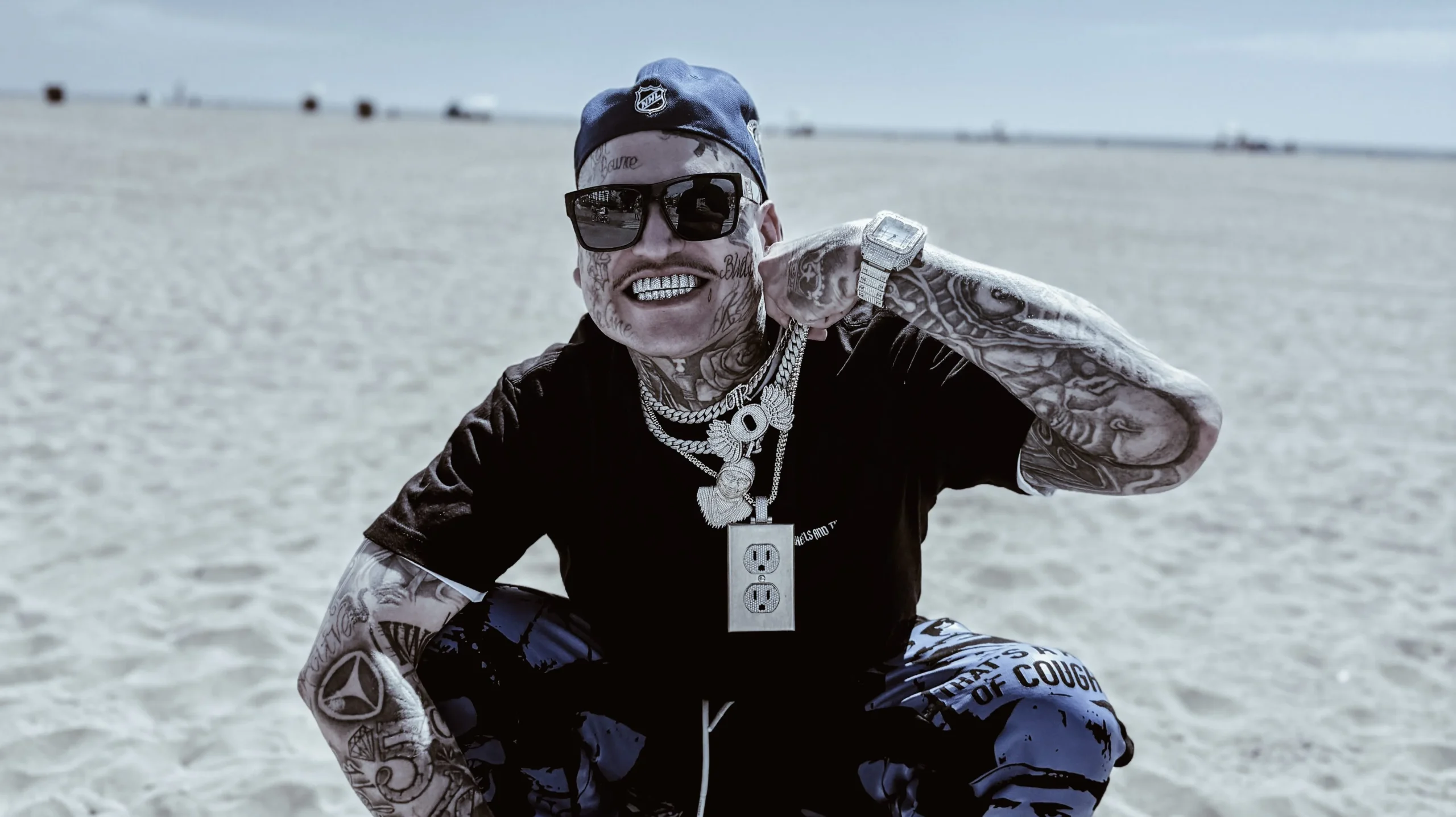
Lefty Gunplay’s exact age isn’t confirmed, but contextual breadcrumbs point to a millennial in his early 30s. References to ’08 bus rides, mixtape-era blogs, and vinyl hand-me-downs align with a pre-streaming teenhood and a career that matured from street-classic singles to independent veteran poise. His cadence shows age-earned breath control, reframing violence as context while prioritizing responsibility and long-game strategy. Fans parse old flyers and lyrics for clues, and the timeline tracks cleanly—there’s more to piece together next.
- Key Takeaways
- How Old Is Lefty Gunplay Today?
- Birth Year and Early Life Timeline
- Career Milestones by Age
- Influences Shaped by His Generation
- Comparing His Age to Peers in the Scene
- How Age Reflects in His Lyrics and Themes
- Public Statements and Clues About His Age
- Social Media and Fan Speculation on His Age
- Impact of Age on Brand and Market Positioning
- What His Age Signals About Future Projects
- Frequently Asked Questions
- Conclusion
Key Takeaways
- Lefty Gunplay is a millennial artist whose age places him between mixtape-era roots and streaming-era strategies.
- References to ’08 bus rides and pre-streaming vinyl hand-me-downs suggest a mid-to-late 30s age range.
- Early 20s: released a first street-classic single; mid 20s: rose from regional to national recognition.
- Late 20s: solidified a signature cadence on a gold project; early 30s: pursued an independent blueprint.
- His maturity shows in cadence, themes of responsibility, and long-game strategy, reflecting age-driven evolution.
How Old Is Lefty Gunplay Today?
How old is Lefty Gunplay today, and why does it matter? His listeners read Lefty Gunplay’s age as more than trivia; it’s a lens for parsing stakes, stamina, and the arc of a voice sharpened by years. Fans mark Lefty Gunplay’s birthday because cadence shifts with time: breath control tightens, ad-libs grow spare, narratives deepen.
Age frames how he measures consequence. The punchlines feel tempered, less flash, more residue. Hooks lean on memory, not novelty, and that maturity repositions him within the scene—adjacent to youth’s rush yet fluent in its codes. When he raps about loyalty or loss, the calendar adds grain to the bars. Lefty Gunplay’s age makes the catalog cohere; Lefty Gunplay’s birthday anchors the myth, turning release dates into rites.
Birth Year and Early Life Timeline
Before the stage name stuck, Lefty Gunplay came up in a year and city that shaped his meter as much as his memories—born into an era where mixtapes cracked from trunks and local DJs still broke records. His birth year sets the frame: a hinge between analog grit and digital acceleration. Neighborhood cyphers, corner-store stereos, and late-night radio became early influences, sharpening cadence and sense of place. He learned to hear timing in transit noise, to sample emotion from block chatter.
- Archival touchstones: regional soundmaps, flyers, and street DVDs that timestamp the birth year against shifting local aesthetics.
- Household rhythms: elders’ vinyl, church tambourines, and televised battles forming early influences on narrative tone.
- City seasons: summer anthems and winter isolation shaping pause, punchline, and breath control.
Career Milestones by Age
Across each birthday, Lefty Gunplay turned age into a metronome, marking phases where craft and context tightened in tandem. He isn’t counting candles; he’s counting risks taken, rooms entered, and exits earned. Milestones arrive like downbeats: debut tapes, breakthrough tours, a sharpened voice hard-won by live nights and quiet edits. Lefty Gunplay’s influences bend through each stage, but he curates them, proving Lefty Gunplay’s longevity is no accident—just revision after revelation.
| Age Mark | Milestone Pulse |
|---|---|
| Early 20s | First street-classic single tests the city’s echo. |
| Mid 20s | Regional acclaim turns to national bookings. |
| Late 20s | Signature cadence crystallizes on a gold project. |
| Early 30s | Independent blueprint scales with patient control. |
Each rung shows intention: narrowing subject, widening frame, and a calendar that hums like a steady snare.
Influences Shaped by His Generation
Raised in the millennial hip-hop landscape, he’s fluent in the blend of mixtape grit, blog-era discovery, and trap minimalism that shaped his ear. The digital-era push taught him to treat each post like a verse—hooks optimized for scrolls, visuals as currency, and metrics guiding release timing without dulling edge. Yet his compass stays street-culture authenticity, where coded detail, lived stakes, and clipped slang keep the bars accountable to the block, not the algorithm.
Millennial Hip-Hop Landscape
Though his story is singular, Lefty Gunplay’s sensibilities were forged in the millennial hip-hop crucible—where blog-era discovery, mixtape pragmatism, and regional cross-pollination collided. He absorbs millennial trends without chasing them, treating the era’s loosened boundaries as craft prompts. The hook’s urgency and the verse’s diaristic detail reflect hip hop evolution that prized both immediacy and authorship. He writes like someone who learned to argue with algorithms through cadence, not volume.
- Regional hybridity sharpened his ear: Southern drum swings meet East Coast density, while West Coast glide keeps the pockets breathable.
- Lyrical stance toggles between confessional grit and coded bravado, mirroring peers raised on forums and liner-note archaeology.
- Mixtape logic persists: modular songs, rotating motifs, and punchy runtime, engineered for replay and annotation.
Digital-Era Self-Promotion
While algorithms rewired the marketplace, Lefty Gunplay learned to make the scroll stop without pandering, folding self-promotion into the music’s narrative logic. He treats digital marketing like songwriting: hooks become captions, bridges become teasers, and cadence guides release timing. His online presence isn’t decoration; it’s structure, clarifying brand identity through recurring motifs and concise visual language. Social engagement doubles as call-and-response, where fan interaction refines audience targeting without diluting intent. A measured content strategy tracks platform evolution, matching formats to mood—snippet, reel, or livestream—while preserving bar-weight. He gauges viral potential as resonance, not gimmick, letting quotables anchor shareability. Carefully chosen influencer collaborations expand context rather than chase clout, turning ecosystem literacy into craft. The result is publicity that listens while it speaks.
Street-Culture Authenticity
Because his cohort came of age in an era where corner-store myth met camera-phone proof, Lefty Gunplay’s authenticity is less costume than checksum—verified by detail, cadence, and consequence. He codes experience into bars like timestamps, where small specifics—bodega bells, bus transfers, bail slips—anchor street credibility without spectacle. The generation’s filter is ruthless: what isn’t lived gets fact-checked by timelines, so he trims exaggeration, prioritizing texture over tropes. That restraint becomes cultural relevance, aligning ethics with evidence.
- Syntax mirrors surveillance: clipped phrases, sudden pauses, and low-frequency slang signal proximity to risk without glamor.
- References function as affidavits—witness names, cross-streets, and dates—creating verifiable narrative grids.
- Moral arithmetic replaces mythology; choices carry prices, and hooks tally costs, not crowns.
Comparing His Age to Peers in the Scene
Set against his contemporaries, his age situates him at a hinge point—young enough to absorb streaming-era tactics, old enough to prize bar-heavy craft. That generational positioning shapes his lyrical lens: coded nostalgia meets present-tense grit, where references stretch from DVD-era mixtapes to TikTok slang. In a scene split between veteran mythology and viral momentum, he threads both tempos, translating age into cadence and cachet.
Age Versus Contemporaries
Though the West Coast scene skews young, Lefty Gunplay’s age places him in a cohort that came up just after the blog-era pioneers and just before the TikTok-native wave, giving his work a lived-in edge peers still sharpening. Against contemporaries chasing algorithmic hooks, he prefers writerly detail and tempo shifts that suggest mileage without sounding dated. In youth culture, that balance complicates age perceptions: he’s neither the new kid nor the legacy act, but a measured voice whose bars carry situational wisdom.
- He trims cadences to fit street reportage, letting negative space punctuate punchlines peers might crowd.
- Beat choices nod to modern drums while sampling textures older acts overlook.
- He codes experience into hooks, turning local slang into durable refrains his cohort echoes.
Generational Positioning
That measured voice also sets where he sits in the lineage: old enough to remember mixtape-site rollouts and DatPiff chatter, young enough to spar with streaming-era metrics without chasing them. His generational identity shows in how he codes bars—slang from blog era corners threaded with platform-era cadence. Age perception works in his favor; he’s neither legacy nostalgia nor algorithm bait, which lets him critique both without sounding bitter.
Compared to peers, he embraces patience: fewer drops, tighter edits, more lived detail. He’s close enough to the youth to mirror tempo shifts, distant enough to keep structure. That middle-slot vantage yields lyrics about cost, provenance, and audit trails of hustle. He’s fluent in timelines, translating eras so the punchlines land in stereo.
How Age Reflects in His Lyrics and Themes
As the years stack up, his verses trade youthful bravado for hard-earned perspective, folding maturity into cadence and content alike. He’s not chasing shock; he’s weighing consequences, mapping scars onto bar structure. That lyrical maturity shows in how he reframes violence as context, not spectacle, and how time—missed birthdays, court dates, studio marathons—becomes a metronome. The thematic evolution is audible: responsibility presses against hunger, memory converses with ambition, and patience sits where impulse once flexed.
- He pivots from instant gratification to long-game strategy, letting choruses carry regret and resolve in equal measure.
- References to lineage and mentorship signal a broadened horizon, placing his story within a wider cultural ledger.
- Production choices slow, allowing space for reflection, texture, and layered hooks that underline shifting priorities.
Public Statements and Clues About His Age
Where do his own words place him on the timeline? He drops breadcrumbs: a bar about “’08 bus rides,” a shout to mixtape-era blogs, and a nod to vinyl hand-me-downs from an older cousin. Those markers imply a teenhood before streaming’s dominance and an apprenticeship during the blog-rap wave. He’s careful, though; he’ll date a memory but dodge a birth year, letting context do the math.
Industry chatter reads those clues against public perception. When he references early recession summers, it aligns with age related trends—artists who matured alongside ringtone rap but professionalized in the playlist decade. Interviews add contour: mentions of graduating “when the blogs still decided everything,” and celebrating a decade of scribbling notebooks. The portrait that emerges isn’t a number—it’s an era-bound silhouette.
Social Media and Fan Speculation on His Age
How do timelines and comment threads turn into amateur forensics? He watches social media spin into a magnifying glass, each post a breadcrumb, each caption a clock. Fan theories swell from screenshots: an old flyer date, a birthday cake in the background, a lyric hinting at summers counted twice. The feed becomes a palimpsest where memory, myth, and metadata overlap, and users splice them into a portrait that might be true, or just beautifully arranged.
- Cross-referencing posted milestones with public events to estimate cohorts and school-year anchors.
- Weighing linguistic drift—slang eras, production choices, visual filters—as cultural timestamps.
- Tracking collaborators’ ages to triangulate likely ranges, while noting how deleted posts create negative space.
In that chorus, speculation isn’t noise; it’s folklore, sung in real time.
Impact of Age on Brand and Market Positioning
Age shapes how Lefty Gunplay threads nostalgia and novelty, shifting his pull between day-one listeners and algorithm-era crowds. As cohorts rotate, his brand either hardens into legacy weight or flexes toward youth codes without losing voice. Endorsement windows move accordingly—heritage labels court credibility now, while fast-fashion and tech tie-ins want timeliness before the moment cools.
Generational Appeal Shifts
Even as Lefty Gunplay’s catalog matures, the audience map keeps redrawing itself—older fans hear lived-in grit, while younger listeners chase the cadence and meme-ready moments. Generational trends shape how the same bar lands: the veterans prize narrative scars and bar-for-bar craftsmanship; the newer cohort indexes for bounce, quotables, and shareability. Cultural shifts around attention economies mean hooks double as slogans, while deep cuts reward patient ears. He threads both by staging voice as texture—weathered yet agile—and by letting production codes toggle between analog thump and digital gloss.
- Pacing evolves: mid-tempo storytelling gives way to percussive pockets without losing gravitas.
- References bridge eras, fusing block lore with platform-native slang.
- Release strategy aligns lyrical density to moments when discovery spikes.
Endorsement Opportunities Timing
As the fanbase skews both seasoned and streaming-native, endorsement windows don’t just open—they stagger. Age reframes urgency: legacy ears reward durability, while algorithm-born listeners chase pulse. He threads both by syncing drops to life markers—tour cycles, anniversaries, court-side sightings—turning biography into calendar. In this lane, endorsement trends favor credibility over novelty; a slower-burn sneaker collab outlives flash-in-feed energy drinks. Timing strategies become craft: soft seeding on podcasts, then a street-level activation, finally a limited online surge timed to chart movement.
He leans into maturer price points—spirits, wellness, heritage denim—without abandoning entry-level merch. The arc is rhythmic: tease, testify, deliver. Brands read the cadence: when the voice sounds lived-in, attach; when momentum spikes, amplify. Age doesn’t limit—it sequences.

What His Age Signals About Future Projects
Though years can calcify some artists, Lefty Gunplay’s age reads more like a tuning fork than a timestamp—clarifying tone, pacing, and ambition. The age impact isn’t about expiration; it’s about calibration. He’s entering a phase where craft outmuscles novelty, where hooks carry memoir weight, and where collaborations skew purposeful. Listeners can anticipate future projects shaped by lived stakes—legal caution, business leverage, and refined storytelling—rather than chasing trends.
- Expect concept-driven sequencing that favors narrative continuity over scattershot singles, aligning release cycles with touring windows and brand partnerships.
- Production will likely warm toward analog textures and regional percussion, grounding autobiographical verses in place and memory.
- Features should narrow: fewer algorithmic pairings, more intergenerational dialogues that test penmanship and expand catalog longevity.
Frequently Asked Questions
What Is Lefty Gunplay’s Real Name and Cultural Background?
He’s known as Lefty Gunplay, but his real name remains undisclosed; his cultural heritage blends Latin and urban American roots. His lyrics reflect diasporic grit, barrio cadence, and hustler poetics, translating identity struggles into sharp, streetwise storytelling.
How Tall Is Lefty Gunplay and What’s His Physique?
He’s reportedly around average Height measurements, with a lean, street-honed Physical fitness. He moves like a verse—compact, resilient—critiques swagger while lifting metaphors, not dumbbells. Culture shapes his frame; his physique’s cadence mirrors bars: tensile, economical, punchy, undeniably present.
Does Lefty Gunplay Have Siblings or Notable Family Ties?
He’s discreet about sibling relationships and notable ties, yet his family background echoes in lyrics—street loyalty, chosen kin, elders’ lessons. Cultural context suggests community-as-family shapes his narrative, so listeners infer bonds without names, hearing lineage through themes, not disclosures.
What Are Lefty Gunplay’s Hobbies Outside Music?
He’s into gaming interests and sports activities, channeling competition into lyrical focus. Offstage, he streams, hoops, and boxes, treating play as practice. Those rhythms sharpen storytelling, reflecting neighborhood codes, digital hustle, and discipline that underpins his cultural commentary.
Has Lefty Gunplay Faced Legal Issues Influencing His Career?
Yes—he’s faced legal troubles that left a clear career impact. They’ve shaped release schedules, collaborations, and narrative framing, embedding street‑realism. Culturally, that tension fuels authenticity; lyrically, he’s mined consequences, surveillance, and redemption arcs, deepening character while complicating industry momentum.
Conclusion
In closing, the piece situates Lefty Gunplay’s age not as trivia but as a lens on craft and culture. With 38% of hip-hop’s Billboard Hot 100 entries now coming from artists over 30, his trajectory fits a maturing scene where longevity equals leverage. He’s balancing veteran poise with street-poetic urgency, reading the timeline like a metronome. The clues, milestones, and fan whispers converge: age isn’t a ceiling here—it’s cadence, credibility, and the cue for his next verse.